
By Brother AD
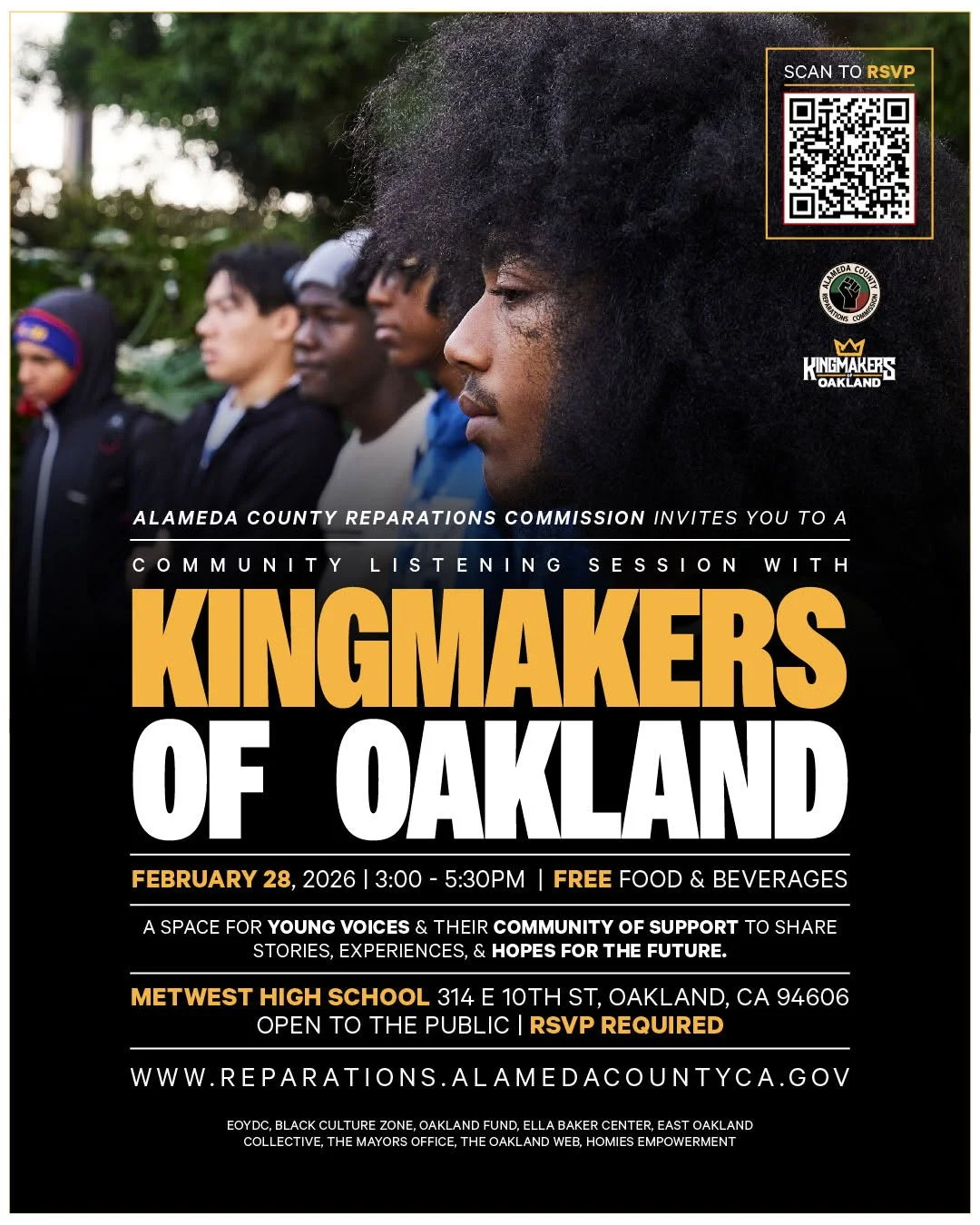
On the final weekend of Black History Month, our TFI Kings stepped into a space that was both historic and deeply sacred. It was the closing community listening session of the Alameda County Reparations Commission, a movement years in the making.
For over a year, the Commission has gathered truth, testimony, and lived experiences from across our communities, centering voices too often unheard while examining the lasting impacts of racism, slavery, and systemic discrimination. Their work is rooted in accountability and healing, to develop a concrete reparations plan and advance policies grounded in equity and justice for Alameda County.
During this experience, our Kings engaged in powerful dialogue with County Commissioners, unpacking the enduring legacy of systemic and institutional racism and exploring how history continues to shape their present realities. More importantly, they were challenged to see themselves as leaders with the responsibility to shape what comes next.
This was more than a field experience; this was a call to responsibility.
In a space built on trust, our Kings spoke their truth. Stories of racial profiling, prejudice, and being followed in stores were shared with honesty and courage. These were not abstract ideas—they were lived realities.
“It gave me a chance to reflect on my experiences and relate more deeply to the brothers around me.”
— Diego Padilla, Senior, Alameda High School
“It created a space for us to speak on our experiences as young Black and Brown men.”
— Xavier Board, Gateway Program- Laney College
Through reflection and truth-telling, our Kings began to understand what it means to carry both the weight and the promise of legacy.
They confronted the reality that systems still exist to challenge their path—but also recognized their power to rise beyond them, to disrupt them, and to lead change.
They left with more than knowledge. They left with awareness.
With brotherhood. With purpose. And perhaps most importantly, they left knowing they are not alone. They are part of a lineage, a movement, a rising.
And with that understanding, they move forward not just as witnesses to history, but as authors of change.